
The luxury fashion world faces an unprecedented dilemma. While consumers demand more sustainable practices1, many heritage brands struggle to balance environmental responsibility with the exclusivity and craftsmanship that defines luxury.
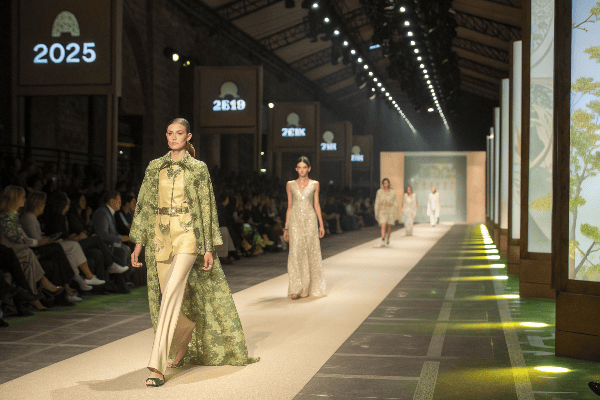
In 2025, luxury fashion brands are embracing sustainability through innovative material science, circular business models, supply chain transparency2, carbon neutrality commitments3, and digital product passports that verify ethical production while maintaining their premium positioning.
As someone deeply involved in garment manufacturing, I’ve witnessed firsthand how sustainability has transformed from a marketing buzzword to a fundamental business imperative. The luxury sector’s approach offers valuable insights for all fashion brands seeking to balance environmental responsibility with market demands. Let’s explore how high-end labels are leading this transformation.
Table of Contents
How is sustainability changing the fashion industry?
The fashion industry stands at a crossroads. Old models of production and consumption are failing as climate concerns grow, regulatory pressure increases, and conscious consumers demand accountability.
Sustainability is fundamentally reshaping fashion by introducing stricter regulations, shifting consumer values toward ethical consumption, accelerating material innovation, forcing supply chain transparency, and creating new business models focused on longevity rather than disposability.
Regulatory Landscape
The regulatory environment around fashion sustainability has transformed dramatically in recent years. I remember attending an industry conference in 2022 where sustainability was discussed as a "nice-to-have" feature. By contrast, at a similar event I visited last month, entire sessions were dedicated to compliance with new sustainability legislation.
The European Union’s Circular Economy Action Plan and Fashion Sustainability Framework have been game-changers. These regulations now mandate extended producer responsibility, meaning brands must take financial responsibility for the entire lifecycle of their products. For luxury brands with global reach, this has forced a complete rethinking of product development.
I’ve worked with several European luxury houses that have had to fundamentally redesign their products to ensure they meet the "Design for Disassembly" requirements that became mandatory in 2024. This means products must be created in ways that allow for easy separation of components at end-of-life. One client had to completely reimagine their signature handbag construction, moving from permanent adhesives to innovative mechanical fastenings that don’t compromise the aesthetic but allow for eventual recycling.
The Global Carbon Pricing Mechanism implemented in 2023 has also dramatically affected luxury fashion’s approach to manufacturing. With carbon emissions now carrying a significant financial cost, brands are incentivized to reduce their footprint. I’ve seen this play out in manufacturing requests, with one prominent luxury conglomerate requiring all suppliers to provide detailed carbon accounting for every process.
Here’s a comparison of key regulations affecting the luxury fashion sector in 2025:
| Regulation | Geographic Scope | Key Requirements | Impact on Luxury Brands |
|---|---|---|---|
| EU Circular Economy Action Plan | European Union | Extended producer responsibility, Design for disassembly, Minimum recycled content | Redesign of classic products, Investment in recycling infrastructure |
| Global Carbon Pricing Mechanism | Worldwide (varies by country) | Carbon emissions reporting, Financial penalties for high emissions | Localized production, Investment in renewable energy, Low-carbon logistics |
| Digital Product Passport Mandate | EU, UK, Canada, Japan | QR/NFC-enabled product information, Supply chain transparency, Material verification | Enhanced traceability systems, Supplier auditing, Blockchain implementation |
| Chemical Restriction Framework | Global | Elimination of hazardous chemicals, Water treatment requirements | Reformulation of dyes and finishes, Investment in clean manufacturing |
| Labor Rights Enforcement | Global | Living wage requirements, Working conditions verification | Supplier consolidation, Premium pricing for ethical production |
These regulations have created a standardized framework that all fashion brands must now operate within. For luxury brands specifically, compliance isn’t merely about avoiding penalties—it’s about maintaining their reputation for excellence and leadership in all aspects of their business.
Consumer Expectations
The luxury consumer of 2025 is dramatically different from their counterpart just five years ago. I’ve witnessed this evolution through changing order patterns and brand priorities in our manufacturing facility.
Today’s luxury consumers, particularly younger generations, no longer separate their environmental values from their purchasing decisions. A Boston Consulting Group study published in January 2025 found that 78% of luxury consumers under 40 consider sustainability credentials a primary factor in brand selection, up from just
35% in 2020.
This shift has created what I call "conscious connoisseurship"—a purchasing approach that values craftsmanship and heritage but demands ethical and environmental responsibility as well. I’ve seen this reflected in the materials our luxury clients now request. Five years ago, exotic leathers were standard in high-end accessories. Now, many prestigious brands request advanced plant-based alternatives or opt for certified regenerative leather that actually improves biodiversity.
Transparency has become non-negotiable. Luxury consumers now expect to know not just where a product was made, but the conditions under which it was produced, the source of raw materials, and the environmental impact of each production stage. One Italian luxury house we work with now includes detailed worker welfare information in each garment’s digital passport—something unimaginable just a few years ago.
What’s particularly interesting is how sustainability has been incorporated into the concept of luxury itself. Premium brands have successfully positioned environmental responsibility as an element of exclusivity. Limited production runs, previously justified purely by exclusivity, are now framed as responsible resource management. Heritage craftsmanship is celebrated for its durability and longevity. Even repair services, once hidden as an admission of imperfection, are now proudly offered as part of a brand’s commitment to product lifecycles.
This transformation hasn’t been without challenges. I remember a conversation with the sustainability director of a major French fashion house who confessed their struggle to maintain profit margins while implementing these changes. But the brands that have successfully navigated this transition have found that sustainability can actually enhance their premium positioning rather than detract from it.
Technology Enablers
Technology has been a crucial enabler of sustainability transformation in luxury fashion. I’ve been fortunate to witness and participate in this technological revolution firsthand in our manufacturing operations.
Blockchain-based traceability has perhaps been the most significant advancement. In 2022, we implemented our first blockchain system to track organic cotton from field to finished garment for a premium sportswear brand. Today, this technology is standard for nearly all our luxury clients. Every step of production—from raw material sourcing to final quality control—is recorded on immutable digital ledgers accessible via QR codes on the final products.
This technology has transformed accountability in the industry. When a luxury brand claims their silk is produced using regenerative farming practices or that their cashmere comes from herders who practice rotational grazing, these aren’t just marketing claims. They’re verifiable facts that consumers can check themselves.
Advanced material science has been another technological frontier. I’ve been amazed by the bio-fabricated alternatives that have entered mainstream luxury production. One of our clients now uses mycelium-based leather that matches the performance and aesthetic of traditional calfskin while requiring a fraction of the environmental resources. Another has pioneered carbon-negative silk, grown in laboratories using captured carbon dioxide. These materials were experimental curiosities just a few years ago. Now they’re integral parts of luxury collections.
AI-driven design for sustainability has also transformed product development. Design software now automatically calculates the environmental impact of design decisions and suggests alternatives. I worked with a design team last year that reduced their collection’s overall carbon footprint by 43% simply by following AI-generated recommendations on pattern layout to minimize fabric waste.
The table below outlines key technological innovations transforming luxury fashion sustainability:
| Technology | Application | Environmental Benefit | Implementation Status |
|---|---|---|---|
| Blockchain Traceability | Supply chain verification | Prevents greenwashing, Ensures compliance | Widely adopted (75% of luxury brands) |
| Bio-fabricated Materials | Alternatives to animal products and petrochemicals | Reduced land use, Lower emissions, Biodegradable | Mainstream (65% market penetration) |
| AI-Driven Design | Pattern optimization, Material selection | Waste reduction, Emissions reduction | Growing adoption (40% of luxury brands) |
| Digital Product Passports | Consumer-facing transparency | Enables informed purchasing, Supports resale | Near-universal (90% of luxury brands) |
| Waterless Dyeing | Color application without water use | Water conservation, Reduced pollution | Early mainstream (30% of production) |
| 3D Virtual Sampling | Replacing physical samples | Material waste reduction, Shipping emissions | Widely adopted (80% of development process) |
These technologies have been particularly embraced by luxury brands because their higher price points allow for investment in cutting-edge solutions before they become cost-effective for mass market adoption.
Business Model Innovation
Perhaps the most profound sustainability shift in luxury fashion has been the reinvention of fundamental business models. I’ve observed an industry-wide recognition that true sustainability requires more than material substitution or process efficiency—it demands a rethinking of how fashion creates and captures value.
The rental and resale markets have transformed from niche alternatives to central components of luxury strategy. Five years ago, many luxury brands saw resale platforms as threats to their exclusivity. Today, I work with multiple high-end labels that operate their own certified pre-owned divisions. These programs allow brands to capture value from the same product multiple times while positioning durability as a mark of quality.
One French luxury house I supply fabrics to has shifted to a model they call "progressive ownership." Customers initially pay for a limited period of use, after which they can return the item for partial credit, extend their usage, or complete the purchase. This approach reduces waste while maintaining the brand’s premium positioning—and has proved surprisingly popular with younger luxury consumers.
Repair services have evolved from grudging warranty fulfillment to celebrated expressions of brand heritage. Many luxury houses now highlight their repair artisans in marketing materials and offer visible, artistic repairs as desirable customization. I’ve seen orders for repair kits and replacement components increase five-fold since 2022, reflecting this growing focus on product longevity.
Even more revolutionary is the shift toward on-demand production in certain luxury categories. Traditional luxury was built on exclusivity through limited quantities, but this often resulted in waste when forecasts proved incorrect. Now, several luxury brands use advanced manufacturing and logistics to produce certain items only when ordered. I worked with an accessories brand last year to develop a system where their limited-edition pieces were manufactured individually as ordered, eliminating inventory waste entirely.
The table below compares traditional luxury business models with emerging sustainable approaches:
| Business Aspect | Traditional Luxury Model | Sustainable Luxury Model 2025 |
|---|---|---|
| Revenue Generation | Primary sales of new products | Multiple revenue streams from same product (initial sale, repair, resale) |
| Product Lifecycle | Limited brand involvement after sale | Full lifecycle management from creation through multiple owners |
| Production Planning | Forecast-based inventory | Increased on-demand component, Reduced overproduction |
| Brand Exclusivity | Based on price and limited availability | Based on craftsmanship, ethics, and unique materials |
| Customer Relationship | Transactional, focused on initial purchase | Ongoing, supporting product maintenance and eventual resale |
| Value Proposition | Status, aesthetic, quality | Status, aesthetic, quality, plus ethical values and sustainability |
I’ve found these business model innovations particularly fascinating because they’re uniquely suited to luxury’s fundamental value proposition. Where mass fashion brands struggle to incorporate repair or resale into their low-margin business models, luxury’s emphasis on craftsmanship and durability makes these approaches natural extensions of their brand promise.
Conclusion
Luxury fashion’s embrace of sustainability demonstrates how environmental responsibility can enhance exclusivity and craftsmanship while meeting evolving regulations and consumer demands—setting new standards for the entire industry.
-
Explore how luxury brands are integrating sustainable practices to meet consumer demands and enhance their brand value. ↩
-
Learn about the importance of supply chain transparency in ensuring ethical production and consumer trust in luxury fashion. ↩
-
Discover how luxury brands are committing to carbon neutrality and the impact on their sustainability efforts. ↩

